I used to book visits to beauty salons and wellness spas when I needed a rest. Too often, I left with a new list of problems.
At the salon, the conversation would turn to the wrinkles around my eyes, or to sagging. I had come to unwind. I was being asked, in a polite way, to worry about how I looked.
Wellness spas were not much gentler. Staff told me my complexion looked off, that my circulation was “blocked,” or that I was in a state of “sub-health.” Still, the effect was the same. I had arrived hoping to put work down. I left feeling I had failed a test I had not agreed to take.
I stopped going.
Wellness should feel like relief, not another obligation. It took me some time to trust that, and to build a quieter way of looking after myself.
What wellness looks like for me now
What that looks like now is ordinary. I take a walk after dinner. When I feel low, I go outdoors and spend time in nature. I cook a meal for my family. And I keep a quiet hour, or sometimes a nap, in the wellness pod at home.
In that broader way of living, I have felt less drained and less anxious, and I have slept better. The point is the shape of the days, not a treatment I have to complete or a standard I have to meet.
This pressure is more widely felt than I first realized
It was only later that I understood this kind of pressure is not something I felt alone.
In Consumer Trends 2026, The New Consumer and Coefficient Capital found that 73% of millennial respondents and 62% of Gen Z respondents agreed that “wellness culture today puts too much pressure on people to be perfect.” The survey was conducted in November 2025 among 3,056 U.S. consumers.
Reading that, I recognized a feeling I already knew: something meant to help us feel better can become another demand to be perfect.
That is the part I carry into my work.
What I would ask of wellness brands and buyers
I am Head of Overseas Markets at XIHE, and we make wellness pods for private homes and for professional spaces. When I talk with wellness brands, spa buyers, and distributors, I think less about how to add another program, and more about the atmosphere people will walk into.
If a space begins by pointing out what is wrong — the wrinkle, the complexion, the so-called blockage — it is already selling a deficit. People notice. Some, like me, will stop coming.
A better offer is simpler. Let people choose whether they want to be there, and how they want to use the time. Treat them with respect. Make the room comfortable, private, and quiet enough that they can put the day down. Do not ask them to become a more perfect version of themselves before they are allowed to rest.
A quieter kind of space
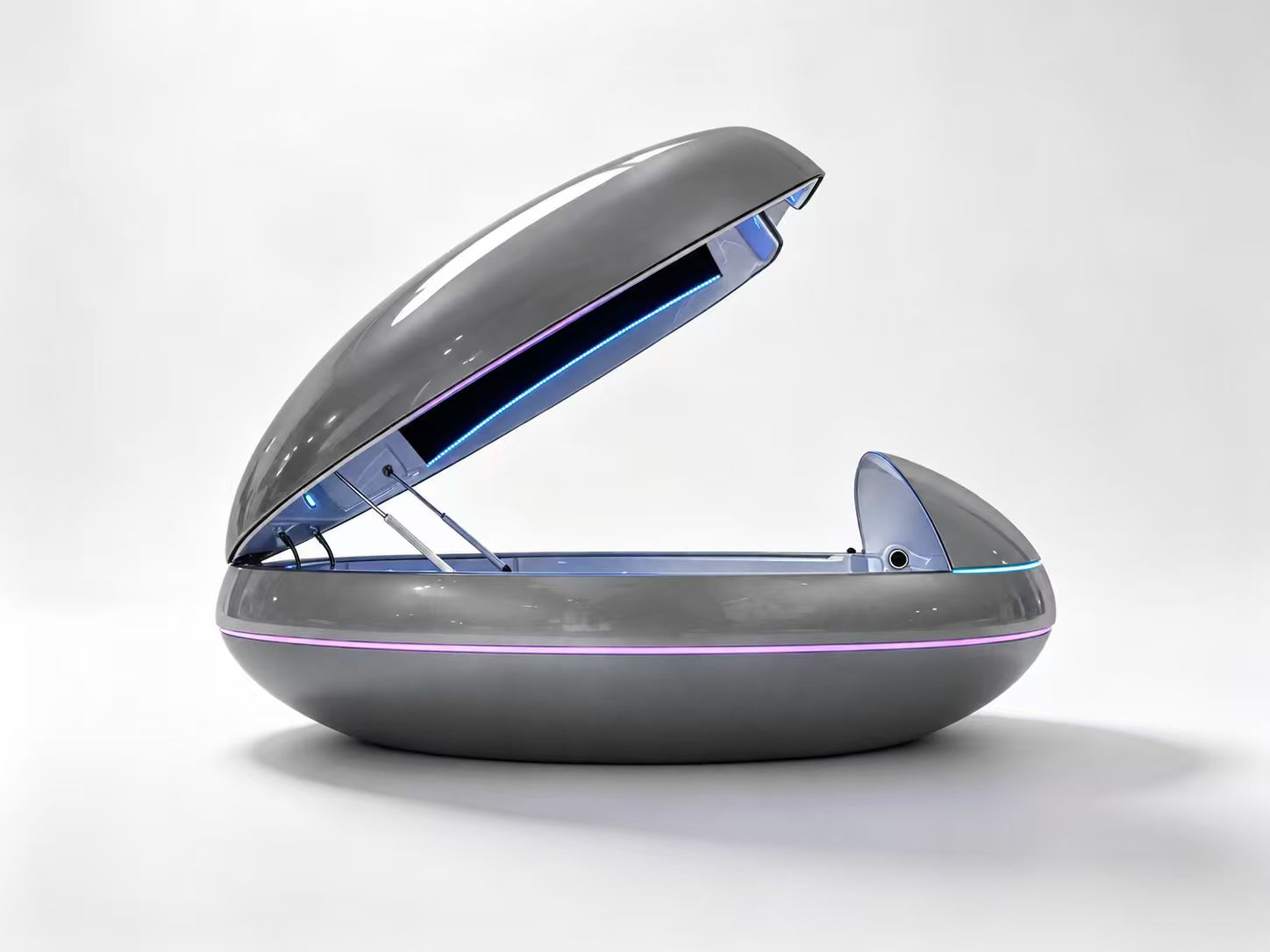
Equipment can support that, or it can get in the way. A pod is only useful if it feels like a place to retreat, not a machine for self-improvement. The Reclining Integrated Wellness Pod we make is a sealed, single-user space for that kind of pause — at home, or in a spa that wants to offer one.
If you are building a wellness brand, fitting out a spa, or looking for a quiet pod for a private setting, I would rather start from that idea. You can see the pod or request a quote. The question I would rather ask first is not how much more someone should do. It is whether the space you offer can feel like relief.
Source. The New Consumer and Coefficient Capital, Consumer Trends 2026, PDF. Consumer Trends Survey, November 2025, n=3,056 U.S. consumers, powered by Toluna. Chart wording and generation figures: report PDF, p. 116.